
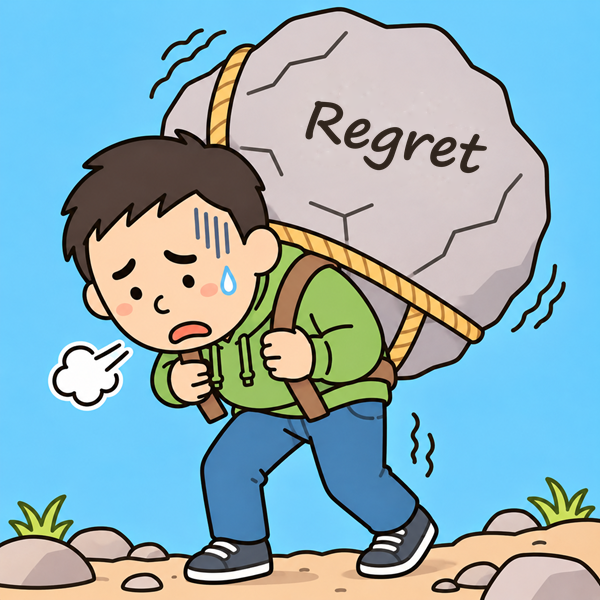
- You keep blaming yourself when you remember choices you made in the past.
- You wonder whether you would be happier if you had taken a different path.
- You want to cherish the years ahead, even with regrets you still carry.

If I’d chosen a different path back then, would I be happier now?
It happened years ago, but I still think about it.

There was something you really wanted to cherish, wasn’t there?
Before you blame yourself for the past, let’s think together about those feelings and what you can do now.
“If only I’d thought it through a little more…”
Do words like that ever come to mind when you look back on your life?
If I’d studied harder, maybe I could have had a different career.
If I hadn’t said that, maybe we’d still be close.
I wish I’d treasured my time with my family more.
You’re alone at night, and suddenly an old scene starts playing in your head.
And somehow, you can picture an alternative life where everything goes your way in surprisingly vivid detail.
“Maybe I wouldn’t have had such a hard time if I’d gone that way…”
Once you start thinking like that, even the life you have now can feel like one big mistake.
That’s really exhausting, isn’t it? (;´д`)
But I don’t think having regrets means your life has been a failure.
And I don’t think moving forward means you have to tell yourself, “Everything in my past was a good experience.”
First, try sorting through what you regret. Separate what you can’t get back from what you can do now.
Then choose one thing you want to cherish from here on.
That’s the order we’ll work through together in this article.
Why Do We Regret Things in Life?
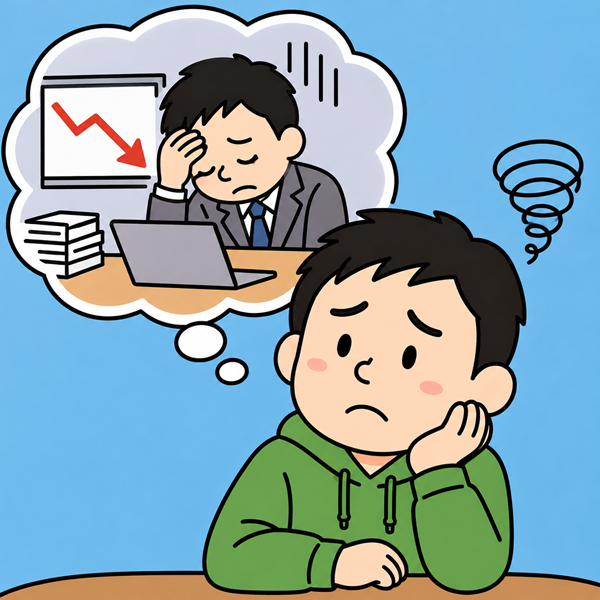
It happened years ago, yet every time you remember it, you feel down and think, “Why on earth did I do that…?”
Perhaps you keep thinking about it because it mattered so much to you.
But when we look back, we can sometimes be a little too hard on the person we were then.
There Were Things You Didn’t Know Back Then
Say you changed jobs, and the new company wasn’t what you expected.
The work is tough, you don’t get along with your boss, and your pay isn’t going up.
“Why did I ever join this company…?” You want to have a word with your past self, the one browsing job listings. (;´д`)
But hang on a moment.
Did you know all of that when you decided to take the job?
The person who interviewed you seemed nice, and the work sounded interesting.
Maybe the conditions were better than at your previous company, and you talked it over with your family before deciding.
In that case, you didn’t exactly choose without thinking, did you?
Once you know the outcome, it’s easy to say, “I should have done this.”
But making a decision when you don’t know what lies ahead isn’t that simple.
Of course, if there was something you didn’t check carefully enough, you can pay closer attention next time.
That doesn’t mean you have to blame yourself for everything, including things you couldn’t have known before you started.
“I did think it through, as best I could back then.”
Try looking back to see whether there are circumstances that help you remember it that way.
The Life You Didn’t Choose Looks So Good
“If I’d taken that job, maybe I’d be earning more by now.”
“If we hadn’t broken up, maybe we’d have built a happy family.”
We can imagine things like that endlessly, can’t we?
And in that imaginary life, your work is going well and your relationships are great.
Somehow, you’re cheerful every day and hardly ever have a problem.
Hold on. Isn’t that other life getting a pretty unfair advantage? ( ̄◇ ̄;)
If you’d actually taken that path, there would have been happy moments, and there would have been unexpected difficulties too.
Neither you nor I know what that life would really have been like.
So if you decide, “I definitely would have been happier,” that’s a little unfair to the life you have now, isn’t it?
You can lose sight of the people beside you and the happy moments you’ve already had.
“Maybe it would have worked out. But honestly, I don’t know.”
I think leaving it there can help you avoid being harder on yourself than you need to be.
One Failure Doesn’t Make Everything a Failure
When something goes badly wrong, it can feel as though your whole life up to that point was a failure.
Something at work falls through, and you think, “What was all that effort even for?”
I understand that feeling. But was everything really worthless?
During that time, you still got up every day, worked, took care of things at home, and listened to people.
Maybe you cooked for your family on a difficult day or helped someone who was struggling.
Not getting the result you hoped for doesn’t erase those moments, does it?
I don’t think you need to dismiss all of that too.
The failure hurts, and you’d do it over if you could.
Even so, you don’t have to write off yourself and all the effort you’ve made.
If a friend were feeling this low, would you say, “Well, your whole life has been a waste”?
Of course you wouldn’t.
I’d love for you to offer yourself that same kindness. (*´ω`*)
What Is It That You Regret?
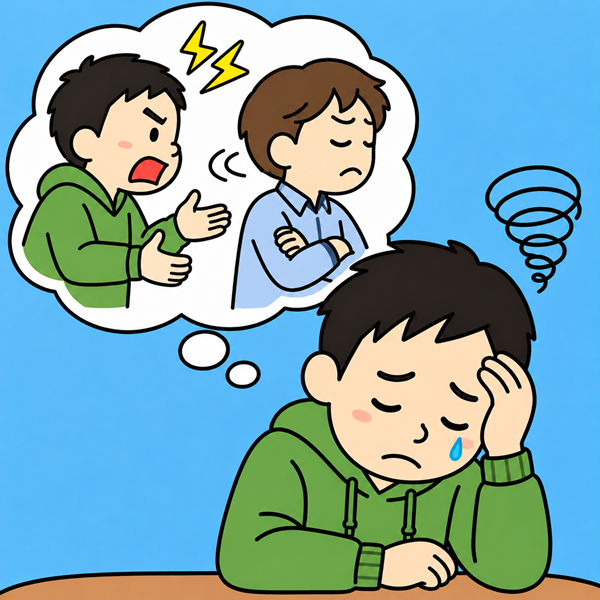
Your work. Your family. Something you said to someone.
What you can do now depends on which part of your life you’re looking back on with regret.
Start with the part that feels closest to what you’re going through.
“I Wish I’d Studied More”
As adults, we sometimes wish we’d spent more time studying, don’t we?
Seeing the qualifications listed in a job ad or listening to someone with specialist knowledge can make that feeling even stronger.
“I had so much time when I was a student. What was I doing…?”
But if there’s something you want to do now, it would be a shame to stop at complaining about your younger self.
Why not think about what you’d like to learn now?
Do you want a qualification for work, to get more comfortable with computers, or to talk with people from other countries?
Even if going back to school is difficult, perhaps you could read books, take an online course, or study while continuing to work.
You don’t have to make up for everything you missed all at once.
I think it’s fine to start by finding something that makes you think, “I’d like to give that a little try.”
“I Wish I’d Told Them How I Felt”
The thank-you you never said.
The apology your pride wouldn’t let you make.
The feelings you couldn’t share with someone you loved.
A few words you couldn’t say in the moment can stay with you for a long time.
If you’re still regularly in touch, you might say, “I’m still grateful for the way you helped me back then.”
Sometimes the passage of time makes it possible to say what you couldn’t before.
That said, I’m not suggesting you immediately contact everyone from your past.
If someone doesn’t want contact, showing up just to make yourself feel better isn’t right, is it?
Keep messaging when they don’t reply, or keep pushing, and you may come across as a stalker… ( ̄◇ ̄;)
If you can’t contact them, you could write a letter with no intention of sending it.
It may help you understand your feelings: “So that’s what I really wanted to say.”
And try not to repeat that same regret with the people beside you now.
Say thank you when someone helps you. Say sorry when you’ve gone too far.
It sounds so obvious, but somehow we keep putting it off, don’t we? (;´д`)
“I Wish I’d Spent More Time With My Family”
“I wish I’d gone to see them then.”
Remembering someone you can no longer see can make your chest ache.
I can’t casually tell someone feeling that way, “Just move on.”
You miss them because you miss them. You feel lonely because you feel lonely.
I think it’s okay to cry over a photograph or tell the same story about them again and again.
You don’t have to scold yourself for grieving, telling yourself you should be over it by now.
Weren’t there also reasons you couldn’t visit at the time?
Maybe you couldn’t take time off work, lived far away, or didn’t realize how serious things were.
Even looking back, we can’t always know what would have happened if we’d acted differently.
Taking responsibility for every part of it is such a painful burden.
If there’s someone you feel able to talk to, let them hear your memories and the words you never got to say.
You don’t have to force yourself to call it “a good experience.”
“I Always Went Along With What Other People Wanted”
You chose a path that would please your parents, took on what people asked of you at work, and put your family’s needs first at home.
Living that way, you may find yourself wondering, “What did I actually want to do?”
But you don’t need to blame yourself for having considered the people around you.
You wanted to care for your family. You didn’t want to make things difficult for anyone.
Sometimes you may simply not have been able to see another way at the time.
Going along with others in the past doesn’t mean you have to keep putting up with everything from now on.
“On my next day off, I’d like some time to do something I enjoy.”
You’re allowed to say that.
Even if you can’t take the whole day, perhaps you could go out for an hour or read a favorite book after dinner.
Try spending some time on your own enjoyment, instead of meeting someone else’s expectations. ♪♪
It might feel a little uncomfortable at first.
But if you find yourself thinking, “I really needed some time like this,” I think that’s a lovely change. (*´ω`*)
What Could You Do Now in These Situations?
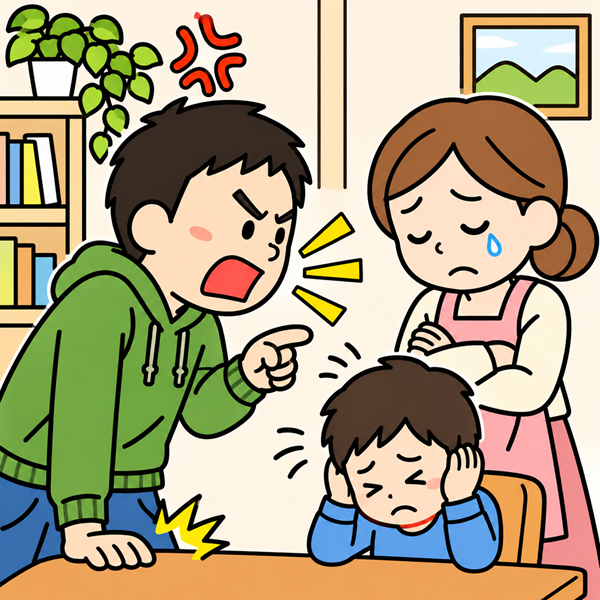
Let’s bring this a little closer to everyday life.
The way you speak to your family, for example. A career choice. A hobby you gave up years ago.
As you read, try asking yourself, “What would I do?”
You Spoke Harshly to Someone in Your Family
Imagine coming home tired from work, and someone in your family starts talking to you.
You snap, “Do you have to bring that up right now?”
Then you see their face and realize you’ve hurt them.
Instead of spending the evening blaming yourself, I think it’s better to start with, “I’m sorry I spoke to you like that.”
I understand wanting to add, “But I was tired too.” Still, that can make it hard for the other person to feel they’ve received an apology.
First, acknowledge that the way you spoke wasn’t okay.
Then, the next time you come home exhausted, try saying, “Could I rest for a bit before we talk?”
Ignoring someone and asking them to wait a little are different things.
Of course, an apology doesn’t necessarily make their hurt disappear right away.
They have feelings too, so you may need to give them time.
Go beyond saying sorry, and change how you treat them next time.
That’s one way to show that you’ve taken what happened seriously.
You Wish You’d Changed Jobs Back Then
Say you turned down a job opportunity a few years ago, and it’s been on your mind ever since.
Whenever something unpleasant happens at work, you think, “If only I’d accepted…”
But didn’t you have reasons for saying no back then?
Maybe you weren’t sure what your pay would be, or you worried about having less time with your family.
You may have forgotten those reasons now, but there were probably parts of that decision you thought through carefully.
With that in mind, write down what you dislike about your current job.
Is the commute too long? Are you unable to do the work you want? Is it a relationship at work?
Once you know, it becomes easier to explain what you’d like help with.
If it’s the work itself, you could ask about changing responsibilities. If you really want a different job, you could look at current openings.
You can’t go back to that time, but there are things you can look into now.
Why not start there before suddenly deciding to quit?
You Feel It’s Too Late to Start
Suppose you’ve always regretted giving up an instrument when you were younger.
“If I’d kept going, I’d be so much better by now…”
It’s true that going straight back to the career path you imagined then may be difficult.
But what do you want to do now…?
Become a professional musician?
Or enjoy playing songs you love?
If it’s the second, surely you’re allowed to enjoy that now.
You might think, “It’s embarrassing to be a beginner at my age.” But you don’t have to compete with anyone.
Look into a trial lesson, or practice one song on an instrument you already have.
Check the cost and time involved, and start with something manageable.
Even if you never catch up with someone who’s played for years, “I managed a little more today! ♪” can make that time enjoyable. (*´ω`*)
It would be a shame to spend so long regretting your late start that another few years slip by.
Look for a way to enjoy it as the person you are now.
You Can Learn From What Happened Without Blaming Yourself Forever
“I understand all that, but I still regret it.”
Some of you may be thinking exactly that. Reading an article doesn’t make years of feelings disappear.
That’s why I want you to know there are other ways to respond when a memory returns, besides blaming yourself.
Think About What You’ll Do Next Time
Suppose you said something harsh without properly listening to the other person.
“Next time, I’ll hear them out before I answer.”
That kind of reflection can help you do better in the future.
But what happens if you keep saying, “I’m such an awful person,” or “I’ve always been terrible at everything”?
You just feel worse, until you can’t see what to do next. (´д`|||)
If that’s happening, return to the particular incident you were thinking about.
“What can I do next time so I don’t repeat this?”
Listen until they’ve finished.
Don’t rush to answer when you’re tired.
If you’ve said too much, apologize honestly.
Once you’ve chosen one thing, I think it’s okay to stop there for today.
Suffering for hours doesn’t automatically make you more caring toward someone.
For me, I’d want to think seriously about how I’ll treat them from now on.
You Can’t Go Back, but You Can Still Do Something Now
You can’t take spoken words back to the moment before you said them.
You can’t choose a different path in the past and start again at that age, either.
But being unable to return to the past doesn’t mean there’s nothing you can do now.
I can’t erase those harsh words, but next time I’m in that situation, I’ll pause before speaking.
I can’t go back to my old school days, but I can explore something that interests me now.
We’re not talking about transforming your entire life. Start with something that small.
If everything feels tangled, write down “What I can no longer change” and “What I might be able to do now.”
You can’t make those words disappear, but you can think about how to avoid speaking that way again.
Before you wear yourself out regretting the past, why not look for one thing you can do today?
5 Things to Try When You’re Carrying Regrets in Life

Here are five things you might be able to do today.
Trying to complete every one could become exhausting in its own way.
Choosing just one that makes you think, “Maybe I’ll try that,” is more than enough.
1. Write Down What You Regret
When everything stays in your head, the same story can keep looping endlessly.
At times like that, write down one incident that’s been bothering you.
You could use these three questions.
What happened?
What did I really want to do?
What might I be able to do now?
“I kept putting off replying to a friend, and now it feels awkward to get in touch.”
“I wanted us to be able to talk more easily.”
“I’ll try replying to the messages I’m getting now, even if it’s just a short reply.”
Something that simple is fine.
As you write, separate what actually happened from what you’re imagining.
It doesn’t need to be beautifully written. You’re not showing it to anyone.
2. When You Get Stuck in Thought, Take a Break
Even if you decide, “I’m not thinking about the past anymore!” memories can still pop up.
Getting upset with yourself every time they do only makes things harder.
When that happens, decide to take just five minutes to make some coffee.
You’re not trying to solve your worries in five minutes.
You’re giving yourself a break from worrying.
Boil some water and drink your coffee slowly.
Even if your mind doesn’t feel clear yet, try doing one thing right in front of you.
The memory might come back halfway through. If it does, try letting out a big sigh over your coffee.
It may help to imagine breathing out some of those tangled feelings with it.
Even on a low day, you need time to enjoy a coffee and let your heart rest.
3. Try a Little of Something That Interests You
When you feel desperate not to let life end this way, you may want to make a big change.
Quit your job, sign up for an expensive course, cut off all your old connections…
But I don’t think you need to decide everything at once while you’re hurting.
If there’s something you’d like to learn, for example, start by borrowing a book from the library.
If it’s a class, find out whether you can take a trial lesson.
For anything that costs money, check the price before signing up.
“With this budget for the month and about an hour a week, would it fit into my life?” Think about what’s manageable.
If you enjoy it, you can work out how to continue. If it doesn’t feel right, it’s okay to stop.
Instead of pushing too hard to make up for the past, I’d love for you to try the things that interest you now, a little at a time.
4. Keep a Note of Why You Made a Decision
I can’t promise you’ll never regret anything again.
Even when we think carefully, things don’t always turn out as we expect.
But you can leave a record of your reasons for your future self to look back on.
For example: “I’m worried about living expenses, so for now I’ll study while keeping my job.”
Even if studying later goes more slowly than you hoped, you’ll be able to remember, “I didn’t just stay in that job without thinking.”
You don’t need an elaborate record.
What mattered most to me in this decision?
What do I know now, and what don’t I know yet?
When might I think it over again?
If you’re unsure about a decision, try leaving a short note about those things.
After listening to other people’s advice, I recommend writing down what you yourself wanted to put first.
5. Talk to Someone Instead of Carrying It Alone
Regrets can feel embarrassing to talk about.
You worry someone might say, “You’re still thinking about that…?”
But when you think alone, you can end up seeing only what you did wrong.
If there’s someone you could talk to, try saying, “There’s something from the past I’d like you to hear.”
If you’re not looking for answers, you can say, “Today, I’d really appreciate you listening rather than giving advice.”
And if you’d like help thinking it through, ask for that.
You don’t have to explain it perfectly from the start.
Sometimes, as you talk, you realize, “Oh, that’s the part that really hurt.”
There’s no rule that says you have to handle everything on your own.
Even With Regrets, You Can Think About How You Want to Live From Here

Blaming your past self won’t undo your words or your old choices.
But you can start thinking now about what you want to do next time.
If all you can hear are words blaming yourself, I’d like to share this prayer from the Bible with you.
Create in me a clean heart, O God, and renew a right spirit within me.
Psalm 51:10 (BSB)
This isn’t someone announcing, “I’ve become a wonderful person who never fails anymore.”
It’s someone asking God, “Please make my heart new.”
Even when we don’t get things right, we’re allowed to ask God for help.
Think of an evening when you’ve spoken harshly to someone in your family.
You remember the sadness on your partner’s face and regret it: “Why did I speak like that?”
But when you try to apologize, out comes, “But I was tired too…”
You know you were wrong, yet you don’t want all the blame to fall on you.
Have you ever thought, “Do I really want to make this many excuses just to say ‘I’m sorry’…?” (;´д`)
You can tell God about those parts of yourself you’re not proud of too.
Admit, “I know I was wrong, but I want to make excuses.” Then ask, “Please help me consider how the other person feels.”
When you look at that moment again, the words of your apology can begin to change.
Instead of “I couldn’t help it; I was tired,” you can say, “I’m sorry I spoke to you like that.”
They may not forgive you right away.
Even so, you can think about how you want to treat them from here on.
You can’t erase the words you said, but you can change the words you say next. (*´ω`*)
For You Who Feel You Have to Handle Everything Alone

Thank you for reading all the way to the end.
“Maybe looking at things this way could make life feel a little lighter.”
If anything here made you feel that way, would you let me share a little more of my story?
I used to think everything through on my own and rely on my own strength to get through it.
I thought that was what it meant to be a strong, capable man. For years, that was the kind of life I kept chasing.
But it also meant that when things went wrong, I felt I had to fix everything myself.
So I kept pushing myself harder and harder, and my heart never really found rest.
After becoming a Christian at 50, I discovered ways of thinking in the Bible that I had never known before.
For example:
When I fail, God does not give up on me. He gives me courage to begin again.
When comparing myself with others leaves me discouraged, He reminds me that I matter.
When I am being stubborn, He helps me say a sincere “I’m sorry.”
When I am worn out from trying so hard, He welcomes me in my weakness and invites me to rest.
When the future feels uncertain, He reassures me that I do not have to carry it all alone.
I found so much wisdom for those ordinary, everyday struggles.
“The Bible talks about things like that, too?”
As someone who had never believed in religion, I was surprised.
In this free email series, I share what I have discovered while reading the Bible and how it has helped me rethink the way I live.
After 50 years of searching, I can honestly call it “life’s greatest treasure.”
You do not need to have read the Bible before.
If you are simply curious about what I have to share, I would be happy for you to read along.
As life goes on, new worries are bound to come up.
At those times, I hope you might remember, “There was another way of looking at this.”
That is what I want to share with you: stories and reflections that can help fill your heart with peace.
(Free) ⇒ Receive Life’s Greatest Treasure by Email